Definitions:
- Schizophrenia: A mental disorder where the schizophrenic (someone with schizophrenia) is unable to differentiate between reality and his or her imagination; basically, they have long-term hallucinations.
- Chromosome: A sequence of genes found in the cell which carries the set of instructions needed for the cell to function.
- Microdeletion: A defect where a part of a chromosome is missing.
- Prefrontal cortex: The part of the brain in charge of making decisions.
- Hippocampus: The part of the brain which controls emotions (the name for the horse comes from the fact that the hippocampus is shaped like a seahorse.)
- Synchrony: Coordination.
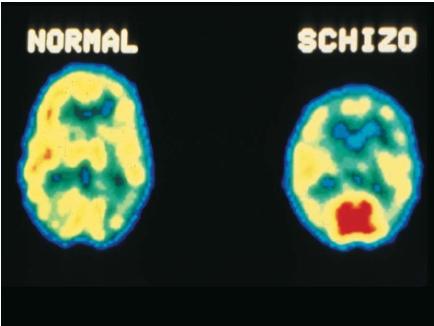
Scientists have recently found a possible cause of schizophrenia. They have discovered that schizophrenics lack a connection between the parts of their brain which control memory and the ability to make decisions, which is why schizophrenics hallucinate and mix reality with their own imagination. According to Dr. Joshua Gordon, they had already suspected the cause to be a problem with "brain connectivity"; however, only recently had they managed to "pinpoint a specific circuit and mechanism by which a mutation produces a core feature of the disorder". Initially, they had observed that the prefrontal cortex, the hippocampus, and the part of the brain responsible for memories were all connected, even though they weren't supposed to be. They also noticed that chromosome 22 was missing from most of the schizophrenics--to test the significance of this missing chromosome, mice with chromosome 22 were tested, and they found a lack of coordination. However, they did not know the root problem of schizophrenia was the fact that their memory hub and prefrontal cortex were not connected.
Discussion:
Schizophrenia and other neurological disorders have always fascinated me. Since the brain is such a complicated organ, it has the most mysteries surrounding it. There is just so much to it--so many parts, so many functions. Because of this, damage to the brain is the hardest to cure. For example, blindness caused by damage to the eyes themselves is reversible, even though blindness caused by damage to the brain is not. The fact that so much research is being done to find cures to neurological disorders is amazing. And one of these disorders which I've always been drawn towards is schizophrenia.
The way to find a cure for something often times is the most effective when the root of the problem is discovered. Now that scientists know the cause of this disorder, they will try to reverse it to find a cure. It will be interesting to see how they manage to find a cure. So far, only methods to keep schizophrenia under control are known; there is no cure yet.
Questions:
- Is it possible that experiences can make someone schizophrenic? Is schizophrenia only genetic, or can it also develop because of trauma or excess stress?
- Is there a way to connect two parts of the brain which are not connected through surgery? If not, by what current methods can they be connected? If they can't, how do scientists plan to do so?
- If connecting the parts of the brain is not how scientists are planning to cure schizophrenia, what ideas might they have in mind?
- "Schizophrenia memory deficits cause found." Science Online. Facts On File, Inc. Web. 17 Nov. 2010. <http://www.fofweb.com/activelink2.asp?ItemID=WE40&SID=5&iPin=UPI-1-20100401-093344-bc-us-schizophrenia&SingleRecord=True>.
- Brain: Normal vs. Schizophrenic. N.d. N.p., n.d. Web. 17 Nov. 2010.
<http://www.scienceclarified.com/images/uesc_09_img0510.jpg>.

3 comments:
I think you should have included "memory hub" in your definitions.
You included all the rest of the difficult words and explained them well enough for the reader to grasp the article's concepts.
Great job on your summary! It covered the article well.
The fact about the disorder being "70 percent heritable" would have contributed well to this section.
Excellent discussion in which your thought progression process is very clearly presented! :)
Great questions.
Correct citations.
Correct formatting.
On the whole, great job! Really interesting CSB!
Hi Archana :),
This is a really interesting post. It explains a lot about schizophrenia, and helps us understand way more about it. But, how did the scientists find out about the connections? Did they use some special type of machine to look into human brains? Great job on your discussion and questions though! They really got me thinking about psychological diseases and wondering about what causes them.
Thanks for the feedback!
I think they probably noticed the abnormal connections through x-rays or maps of the brain, and realized there was a pattern in all the schizophrenic patients. Probably something along those lines.
Post a Comment