Saturday, May 21, 2011

CSB #08: How Certain Videos Affect Heart Rate

This experiment was conducted by me, Helen, and Kelly Most of us have laughed so hard watching a video that we've gone out of breath. Surely, our heart rate must have increased, right? This experiment is intended to test whether videos affect our heart rate and which ones do not.

Through this experiment, we assessed the change in people’s heart rate when watching certain videos. We created a play list of five videos: a video of a talented street dancer, an eerie video, a funny “fail” video, a song (music video), and a video of a sleepy kitten, all of which you can see here. Using a heart rate grip monitor and Logger Pro 3.0, we monitored the change of heart rate in five different people while they were watching the videos.

We hypothesized that if the videos initiated any change in heart rate at all, then the first three videos, which were fast-paced, scary, and humorous videos, would result in an increase in heart rate, while the last two, cute and relaxing videos, would lower the heart rate. Each playlist included one advertisement about insurance, which we predicted would also result in a lower heart rate. Our five test subjects were Catherine, Mr. Contini, Vivian, Sabrina, and Andrew, a variety of races, ages, and genders. The general trend that we predicted was (1) an increase in heart rate during the dance video, (2) a lowered heart rate during the ad, (3) an increase in heart rate during the “scary” video, (4)a further increase during the funny video, and finally (5) a sharp decline in heart rate during both the song and the video of the kitten.

First, before we started collecting data on Logger Pro, we made sure that the subject's heart rate was being steadily recorded, and then we began playing the playlist. The videos were played in one-minute intervals, so if they were longer than a minute, we stopped them in the middle and switched to the next video. To make sure we were comparing the change in heart rate with the correct videos, we recorded the intervals on the graph on Logger Pro which corresponded to the start and end times of each video. After the playlist was done, we stopped collecting data and started a new Logger Pro file for each test subject. After repeating this procedure for all five of our subjects, we analyzed the results.

Contrary to our hypothesis, 3 people’s heart rate increased during the music video, and 3 other people’s heart rates increased during the video of the sleepy kitten, while one person’s heart rate decreased during the scary video. In addition, one person’s heart rate decreased during the dance video and two people’s heart rates went up during the advertisement. Although there were a few exceptions, the data collected generally supported our initial hypothesis for the first three videos. More experimentation is needed to know why results varied so much during the music video, kitten video, and advertisement. The first video of a street dancer may have caused an increase in heart rate because of the loud beat, fast pace, and sharp dance moves, all possible contributors to excitement in the subjects. While watching the second video, the unsettling art style and eerie music may have triggered fear and increased the heart rate. During the humorous video, the increase in heart rate could be attributed to laughing or excitement, which would make the heart speed up. The advertisement sometimes lowered and sometimes increased heart rate, possibly showing that some people were intrigued and others were bored by it. Some of our test subjects, like Catherine, whose heart rate increased by approximately 14 BPM during the ad, smiled or laughed at the advertisement, and their heart rates went up. It is possible that measuring a person’s heart rate during an ad can measure their level of interest towards it. During the music video, people’s heart rates both increased and decreased at random intervals, which contradicted our hypothesis; we had initially expected the subjects’ heart rates to decrease because of the slow pace of the song. Although the music was calming, the some of the heart rates, like Vivian's, whose increased approximately 8 BPM, may have increased because of the nature of the song (love song) and/or because the people in the video were attractive. Additionally, the majority of the subjects’ heart rates increased during the video of the sleepy kitten, although there were a few exceptions where the heart rate decreased. This may have been because the kitten was “cute”, which may have triggered a small adrenaline rush and caused increased heart rate. For those whose heart rates went down, it could have been that they are part of that group of people who are unaffected by “cute” things or maybe it was relaxing for them.

For further experimentation, we could ask our test subjects to write down their emotions while watching the videos to see what emotions are associated with increasing and decreasing heart rate. Also, we could take a bigger and more varied group of people to be sure that our results apply to a larger scale of people as opposed to just the select group we chose. It would help to be able to control when the advertisement played because it might make a difference if it was in between two intense videos or in between two calming videos. In addition, having more time to play more videos and being able to play the entire videos might have an effect on our results as well.

Here is our data:

(Click to enlarge)


Here are the graphs:

(Click to enlarge)

Sunday, May 8, 2011

CSB #07: Brain Structure Altered by Memories


A digitally crated image of the synapses in the brain.

As a result of extensive researching on mice, scientists have come to a conclusion that the brain actually changes its structure based on memories by forming new connections and cancelling previously formed ones. According to Piergiorgio Strata from Italy's National Neuroscience Institute, memorizing is an example of the brain changing its structure. "When we have to memorize something, in a structure called the hippocampus or the cerebellum," he says, "the things to be remembered are selected. [...] Some of them are sent to permanent storage areas located in various parts of the brain's cortex, while others are organized differently, with inhibitory synapses coming into play." Synapses are junctions between neurons through which signals are sent, or in other words, brain connections. In order to memorize something, the brain alters previously formed connections.

A more permanent form of the brain altering its connections is through fear, a more "intense" memory. According to researchers, "the research [about how these new connections form] could pave the way for discovering the molecular foundations of phobias and anxieties."

In addition, these new connections also allow short-term memory to be stored as long-term memory through a process called consolidation, states Strata.

I found this article interesting because I have always wanted to learn how fear physically impacts the brain. If researchers can trace these connections and learn how to prevent them, some irrational fears and phobias can be prevented. Through fear, researchers can also track other emotions and may even learn how to control them (scary thought!). However, currently the focus is to track and analyze fear, and the research presented in the article seems to be the first step.


Citations:

(1) United Press International, Inc. (UPI). "Study: Memories change brain structure." Science Online. Facts on File,
2 May 2011. Web. 8 May 2011. .

(2) http://www.theatretime.co.uk/wp-content/uploads/2010/07/Synapse-2.jpg

CSB #07: Brain Structure Altered by Memories

A digitally crated image of the synapses in the brain.

As a result of extensive researching on mice, scientists have come to a conclusion that the brain actually changes its structure based on memories by forming new connections and cancelling previously formed ones. According to Piergiorgio Strata from Italy's National Neuroscience Institute, memorizing is an example of the brain changing its structure. "When we have to memorize something, in a structure called the hippocampus or the cerebellum," he says, "the things to be remembered are selected. [...] Some of them are sent to permanent storage areas located in various parts of the brain's cortex, while others are organized differently, with inhibitory synapses coming into play." Synapses are junctions between neurons through which signals are sent, or in other words, brain connections. In order to memorize something, the brain alters previously formed connections.

A more permanent form of the brain altering its connections is through fear, a more "intense" memory. According to researchers, "the research [about how these new connections form] could pave the way for discovering the molecular foundations of phobias and anxieties."

In addition, these new connections also allow short-term memory to be stored as long-term memory through a process called consolidation, states Strata.

I found this article interesting because I have always wanted to learn how fear physically impacts the brain. If researchers can trace these connections and learn how to prevent them, some irrational fears and phobias can be prevented. Through fear, researchers can also track other emotions and may even learn how to control them (scary thought!). However, currently the focus is to track and analyze fear, and the research presented in the article seems to be the first step.


Citations:

(1) United Press International, Inc. (UPI). "Study: Memories change brain structure." Science Online. Facts on File,
2 May 2011. Web. 8 May 2011. .

(2) http://www.theatretime.co.uk/wp-content/uploads/2010/07/Synapse-2.jpg

Thursday, April 7, 2011

CSB #06: Plants as an Alternative Energy Source

A picture of the Miscanthus, a possible source of fuel when "dry-roasted."

After much research, British researchers realized that plants "pre-roasted like coffee beans" could replace a large amount of coal in power plants; in other words, burning "energy crops" like willow and Miscanthus could serve as a major alternative energy source. Further research to test the efficiency of these plants was conducted at the University of Leeds.

British power plants are already burning plant matter along with coal. But since biomass is "moist and bulky, making it difficult to store for long periods without going [moldy]," coal is more commonly used. In the University, however, they discovered that through a process called torrefaction, where the plant matter is heated up to 575 degrees Fahrenheit in an air-free container. Once heated, the once-inconvenient plant mass into a "dry, energy-rich fuel that is cheaper and easier to move around and has a much longer shelf life."

Some crops which can be used as "energy crops" are willow, Miscanthus, and waste plant matter from farms and other plantations, like branches, etc. According to Professor Jenny Jones, "[...] many more farmers would be interested in growing energy crops on areas or poorer quality soil." However, she points out that switching to burning biomass might be bad financially, as it is a lot more expensive that just the conventional burning of coal. "If the economic barriers [are] lowered," she says, "[...] the power companies could use more biomass without losing out financially."

This article stood out to me from all the others, because I had never considered burning plants as a source of energy. Through the process of torrefaction, though, researchers have realized that plants are actually rich in energy when they are dry-roasted. If money were not a setback, switching to burning biomass would actually a plausible idea, although in the future, finding a ready supply of plant matter may be a problem. Being more readily available than coal, though, makes it an alternative energy source which, upon further development, may be able to replace the limited resources we currently use.

Sources:

  • "'Dry-roasted' plants could be energy fuel." Science Online. Facts On File, Inc. Web. 4 Apr. 2011. <http://www.fofweb.com/activelink2.asp?ItemID=WE40&SID=5&iPin=UPI-1-20110105-184652-bc-britain-plantfuel&SingleRecord=True>.
  • http://www.bluestem.ca/images/miscanthus-blutenwunder.jpg

Monday, March 7, 2011

CSB #05: Sleep helps you remember better

This diagram shows which parts of the brain are responsible for different types of memory storage.


Contrary to what most people believe, sleeping helps you remember things better. While you are asleep, your brain essentially "ranks" memories in order of importance and readies itself for the next day. An experiment was conducted at the University of Tubingen to test if sleep really did effect how well you remember something.

191 adults were told to memorize word-pairs: a general memory test. The group was divided into four parts. First, half of the adults were told they would be tested on those word pairs in nine hours, while the other half was told they would be tested on a different subject. Within the portion of the adults who were told they would be tested on the word pairs, some of them were told they could sleep and would be woken up to take the test. The rest of the adults in that group were to remain awake. Similarly, from the group which was told they would be tested on a different matter, some were allowed to sleep while the others were to remain awake.

After 9 hours, all four groups were tested on the word-pairs. The adults who were told they were to be tested on word-pair and who had gotten sleep did the best out of all four of the groups; "they recalled 12 percent more word pairs than those sleepers who had no expectation of being tested again on the same information," said researchers. It was also noted they had more "slow-wave" sleep, or deep sleep, which is linked to memory consolidation, as well. The adults who were told they would be tested on a different matter and did not sleep did the worst out of all four of the groups.

According to Born, one of the researchers, ""There is an active memory process during sleep that selects certain memories and puts them in long-term storage." Basically, when you sleep, your brain orders its memories in terms of importance and places the most important ones in long-term storage so you remember them longer. Without sleep, your brain does not do this; so sleeping helps you remember "important" things longer.

I found this interesting, because generally right before a test, people "cram" and don't get enough sleep. This article supports the idea that cramming and not getting sleep is not an effective idea, as everything you try to remember remains in short-term memory instead of long-term memory. Sleep is important to order your memories and remember them for long periods of time. Also, studies have shown connections between sleep deprivation and short-term memory loss; without sleep, it is harder to remember things. Although most people don't believe so at first, sleep is essential to remember things--especially before a test.

Sources
  • "Brains 'rank' memories as we sleep." Science Online. Facts On File, Inc. Web. 7 Mar. 2011. <http://www.fofweb.com/activelink2.asp?ItemID=WE40&SID=5&iPin=UPI-1-20110201-201041-bc-germanysleepmemories&SingleRecord=True>.
  • http://www.scientificjournals.org/journals2007/articles/graphics/1038.gif

Saturday, January 8, 2011

CSB #4: How Harry Potter's Broomstick Flies

http://unrealitymag.com/wp-content/uploads/2009/02/46955_f520.jpg

Definitions:
  • Wizard: Someone who, with a magic wand, can perform magic. (female, witch)
  •  Quidditch: The most popular sport in the wizarding world played on flying broomsticks
  •  Hogwarts: The most famous wizarding boarding school in England


Summary
Revolving around the happenings at a boarding school for witches and wizards of the time, the famous Harry Potter series follows the title character’s many magical adventures as he tries to free the wizarding world from the evil of the darkest sorcerer of the era, Lord Voldemort. As the plot is set in a world run entirely by magic, there are many aspects of the book which remain unexplained by science. One of those things is Quidditch, the most popular sport in the wizarding world. Two teams compete against each other on flying broomsticks to score the most points and, consequently, win. There are many different explanations as to how the broomsticks manage to stay aloft, yet the matter still remains a mystery.

Discussion
In Roger Highfield’s book, “The Science of Harry Potter: how magic really works” there is an entire section of the book dedicated to how the broomsticks used in Quidditch fly. There is a mention of a toy called ‘Levitron,’ which is basically a top which spins in the air (held up by magnetic forces) when placed above a stationary magnet.

It may be possible that the broomsticks contain similar ‘spinning magnets’ inside them while hovering over a magnetically lined Quidditch pitch. However, since broomsticks can stay aloft anywhere, not just over the Quidditch pitch itself, this theory isn’t feasible, unless the whole world is aligned with magnets. It could be, however, that the spinning magnets react to the magnetic field of the earth, making it possible to fly anywhere on the planet. Also, “one of the Potter books contains a fleeting reference to how there is too much magic in the air around Hogwarts for electronics to work—a tantalizing hint that the school is bathed in an electromagnetic field powerful enough not only to disrupt sensitive microchips but also to lift a person into the sky.” Highfield may be right; however, a broomstick doesn’t fly better within the Hogwarts grounds than outside, so the spinning magnets in the broom may only be reacting to the earth’s magnetic field. Highfield discusses the downsides in his arguments by countering that “so strong a field would also exert an extraordinary tug on anything ferromagnetic, such as iron, cobalt and nickel, making its presence obvious and something of a nuisance to the inhabitants.” Therefore the magnetic force may not be from Hogwarts, but from within the earth itself.

The idea of spinning magnets inside the broom also makes sense when speaking of how brooms may vary in quality. The Firebolt, for instance, may have finer, bigger magnets which spin faster, allowing more speed and levitation and giving the rider greater control over the movement of the broomstick itself.

To summarize, a broomstick may be lined on the inside with spinning magnets to react with the earth’s magnetic field, giving it the ability to remain aloft.


Questions

  • If broomsticks really do fly because the spinning magnets in the broom and the magnetic field of the earth repel each other, doesn't that mean that it would actually be ATTRACTED to the earth when the magnetic field switches?
  • How would magnets explain how riders often describe their brooms to "turn at the lightest touch"?
  • How would magnets explain how a broom jumps into a rider's hand when he/she says the word "Up"?

Citations
  •  Highfield, Roger. The Science of Harry Potter: how magic works. N.p.: n.p., n.d. 
     Google Books. Web. 8 Jan. 2011. <http://books.google.com/ 
     books?id=U9XB5HNr0OAC&pg=PT17&lpg=PT17&dq=how+do+broomsticks+fly+science&source=b 
     l&ots=lf2QcOjjoh&sig=llvXrktScMilQzBxZc69tYRb19Q&hl=en&ei=zLYoTfzcCpS4sQP9jcngBw& 
     sa=X&oi=book_result&ct=result&resnum=6&ved=0CD8Q6AEwBQ#v=onepage&q&f=false>

  •  Rowling, J.K. The Harry Potter Series. N.p.: n.p., n.d. Print.

Wednesday, November 17, 2010

CSB #03: Cause of schizophrenia


Definitions:
  • Schizophrenia: A mental disorder where the schizophrenic (someone with schizophrenia) is unable to differentiate between reality and his or her imagination; basically, they have long-term hallucinations.
  •  Chromosome: A sequence of genes found in the cell which carries the set of instructions needed for the cell to function.
  • Microdeletion: A defect where a part of a chromosome is missing.
  • Prefrontal cortex: The part of the brain in charge of making decisions.
  • Hippocampus: The part of the brain which controls emotions (the name for the horse comes from the fact that the hippocampus is shaped like a seahorse.)
  • Synchrony: Coordination.
Summary:
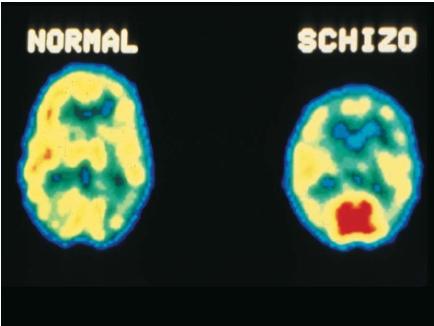
 Scientists have recently found a possible cause of schizophrenia. They have discovered that schizophrenics lack a connection between the parts of their brain which control memory and the ability to make decisions, which is why schizophrenics hallucinate and mix reality with their own imagination. According to Dr. Joshua Gordon, they had already suspected the cause to be a problem with "brain connectivity"; however, only recently had they managed to "pinpoint a specific circuit and mechanism by which a mutation produces a core feature of the disorder". Initially, they had observed that the prefrontal cortex, the hippocampus, and the part of the brain responsible for memories were all connected, even though they weren't supposed to be. They also noticed that chromosome 22 was missing from most of the schizophrenics--to test the significance of this missing chromosome, mice with chromosome 22 were tested, and they found a lack of coordination. However, they did not know the root problem of schizophrenia was the fact that their memory hub and prefrontal cortex were not connected.

Discussion:
 Schizophrenia and other neurological disorders have always fascinated me. Since the brain is such a complicated organ, it has the most mysteries surrounding it. There is just so much to it--so many parts, so many functions. Because of this, damage to the brain is the hardest to cure. For example, blindness caused by damage to the eyes themselves is reversible, even though blindness caused by damage to the brain is not. The fact that so much research is being done to find cures to neurological disorders is amazing. And one of these disorders which I've always been drawn towards is schizophrenia.
The way to find a cure for something often times is the most effective when the root of the problem is discovered. Now that scientists know the cause of this disorder, they will try to reverse it to find a cure. It will be interesting to see how they manage to find a cure. So far, only methods to keep schizophrenia under control are known; there is no cure yet.

Questions:
  • Is it possible that experiences can make someone schizophrenic? Is schizophrenia only genetic, or can it also develop because of trauma or excess stress?
  • Is there a way to connect two parts of the brain which are not connected through surgery? If not, by what current methods can they be connected? If they can't, how do scientists plan to do so?
  • If connecting the parts of the brain is not how scientists are planning to cure schizophrenia, what ideas might they have in mind?
Citations:
  • "Schizophrenia memory deficits cause found." Science Online. Facts On File, Inc. Web. 17 Nov. 2010. <http://www.fofweb.com/activelink2.asp?ItemID=WE40&SID=5&iPin=UPI-1-20100401-093344-bc-us-schizophrenia&SingleRecord=True>.
  • Brain: Normal vs. Schizophrenic. N.d. N.p., n.d. Web. 17 Nov. 2010.
         <http://www.scienceclarified.com/images/uesc_09_img0510.jpg>.